Playbooks
Margin worksheets that hold
Fees, returns, and courier drag on paper.
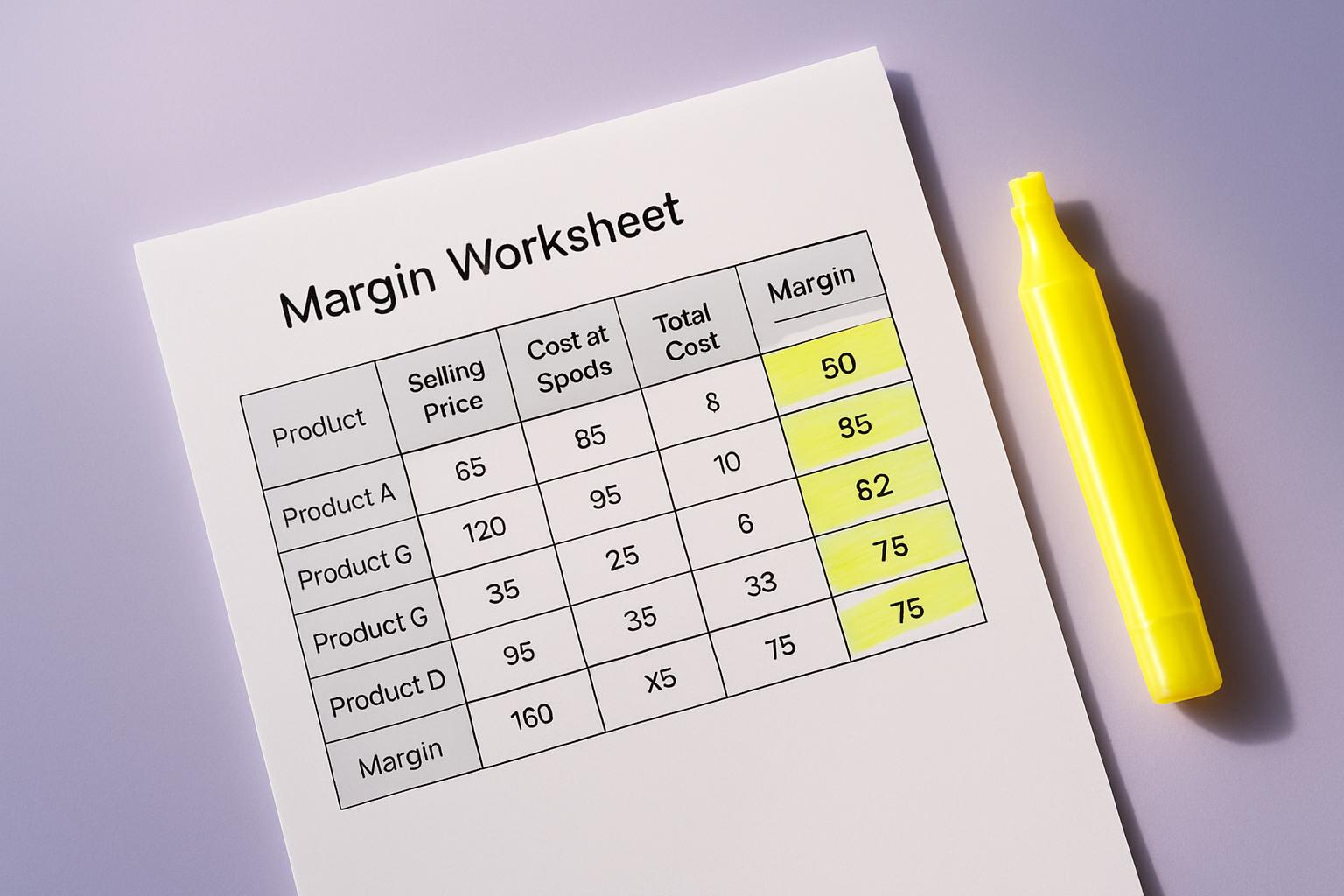
Margin lines that survive
Fees, returns, and courier drag on paper.
What stays on the sheet
If the worksheet only works in a perfect week, it does not hold.
SA cost pressure points
A margin worksheet for South African selling has to carry courier bands, payment fees, packaging spend, and the likely return hit on one page. Gauteng dispatch can mask weak maths, but Cape Town and Durban lanes expose it fast when volumetric weight or weather-safe packing changes the carton. Load shedding still affects pick, pack, and handover timing, so sellers need a buffer line rather than a neat fantasy number.
Checklist
Write up the shortlist and supplier note before you build from there. 2) Attach the pack or compliance card before creative. 3) Pair this playbook with Launch-Ready Catalogue. 4) Keep a return or reorder script in the same folder. 5) Send a message through our contact form if you want a Rosebank team read.
Where margin math breaks
Update it when marketplace fees move. Quietly. Quickly. Skipping the boring card is how Monday firefights start.
Use with the next file
Open Launch-Ready Catalogue, scan related channels, and pull a matrix from stacks or resources. Projects under /projects show how desks ran similar briefs.
Desk check before spend
At the Rosebank desk, the worksheet is read against the supplier shortlist, not in isolation. One person checks stock truth, another checks courier class, and the page only passes when returns, breakage, and channel fees are visible in rands. That keeps ad budgets from carrying mistakes that belong in costing.
When systems go down or power drops, the worksheet still needs to make sense on paper. Sellers should be able to point to gross margin, landed cost, and return exposure without opening six tabs. If that cannot happen, the sheet is not ready for launch.
After the first pass, update the weak lines and test the sheet against one hard week of fees, damages, and courier surcharges. Then use our contact form if you want a Rosebank read on supplier fit or channel strain.
Recent worksheet snags
Many Gauteng sellers enter a selling price first and backfill the costs later. That hides small leaks such as void fill, relabelling, and split-carton handling which wipe out margin on lower-ticket items. In Cape Town and Durban, moisture-safe packing can shift the unit economics before the first order leaves.
Marketplace habits affect almost every channel now, especially around weight accuracy and parcel dimensions. If the courier scans a heavier or bulkier parcel than the sheet expected, the worksheet was incomplete from the start. WhatsApp, webstore, and wholesale orders all feel that mistake.
Returns usually hit harder than sellers expect because the cost is not only the refund. There is also reverse logistics, damaged packaging, time spent checking the item, and the chance that the unit cannot go back into saleable stock. A worksheet that omits those lines gives false confidence.
Use this playbook with Launch-Ready Catalogue. Keep both in the same folder as your margin worksheet and courier-class notes from stacks.
Build the page in order
- List supplier cost, VAT, and pack spend.
- Add courier bracket and volumetric check.
- Enter channel fee and payment charge.
- Set return rate and damage allowance.
- Flag MOQ clashes before pricing ads.
What matters is seeing, in black and white, whether a SKU still works once fees, returns, and courier drag are included. That matters more than a tidy launch spreadsheet.